Last updated November 21, 2026
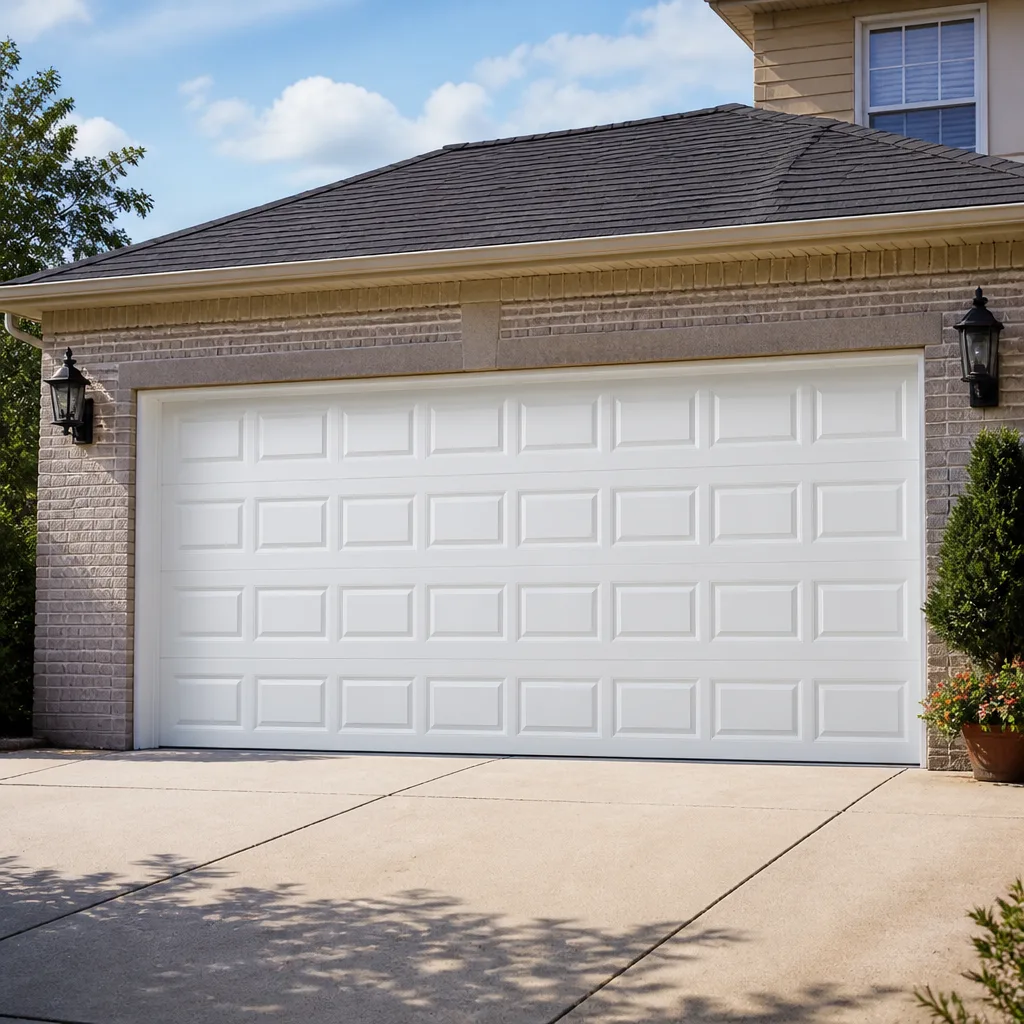 Raised-panel steel
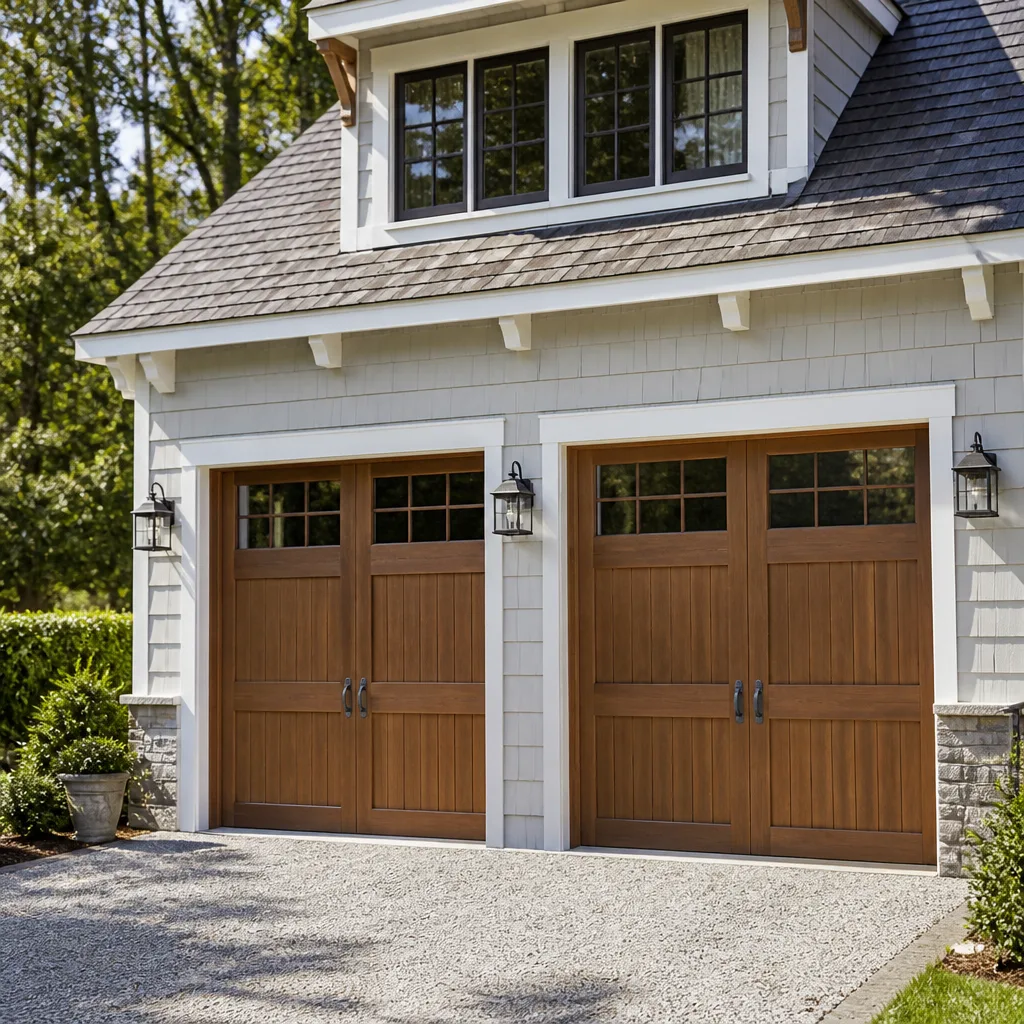 Carriage house
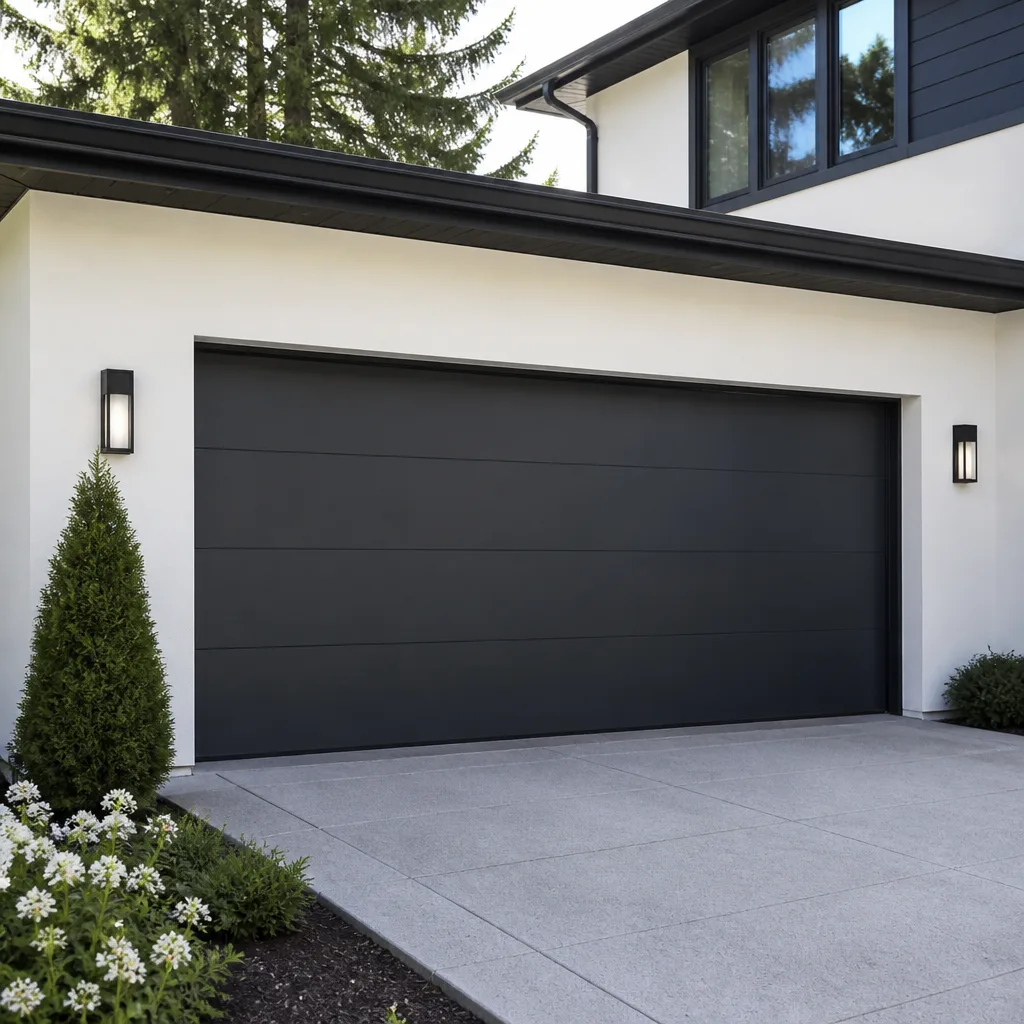 Modern flush
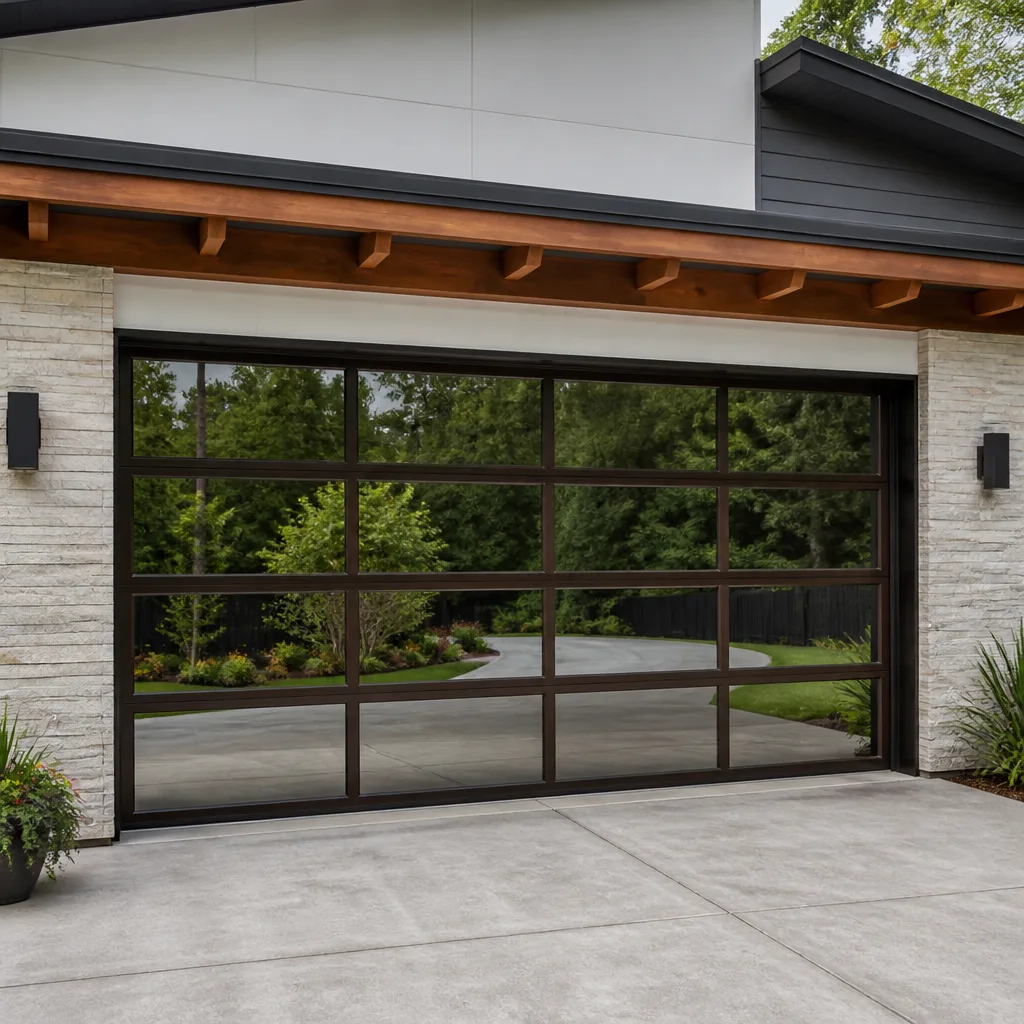 Full-view glass
 LiftMaster openers
 Chamberlain openers
Full 25-point door and opener safety check with every visit - springs, cables, rollers, tracks, and your LiftMaster or Chamberlain opener included
You get a price before we start. It does not change when the pro arrives.
Get your free estimateGarage Door Warning Signs: A Blaine Homeowner’s Reference Guide
A garage door that hesitates for half a second before it moves isn’t “almost fine.” That pause usually means a spring is losing tension and handing the lifting work to the opener motor, and openers that pick up that extra load tend to quit a few months later. The trouble is that most homeowners have never been told what normal operation should sound and feel like, so the early signals get filed away as “just the door being the door.” This guide changes that. We’ll walk through what each sound points to, which visual cues you can check without touching anything dangerous, and how Blaine’s long winters create stiffness that looks like a problem but isn’t. By the end you’ll know what’s urgent, what can wait for a scheduled appointment, and what to leave alone entirely.
Quick Answer
The warning signs that matter most are a door that pauses before moving, grinding or popping sounds during travel, a visible gap in a torsion spring, frayed or stripped cables, and rollers that wobble or look flat on one side. Signs that need a call today include a snapped spring, a door hanging crooked, a cable that has come off its drum, or any door that won’t stay up on its own. Slower cues like squealing, rattling, or a door that reverses before it closes can usually wait for a scheduled visit in Blaine.
Styles & brands we work with
- Raised-panel steel
- Carriage house
- Modern flush
- Full-view glass
- LiftMaster openers
- Chamberlain openers
Table of Contents
- What the Sounds Are Telling You: A Component-by-Component Guide
- Visual Checks You Can Do Safely
- The Balance Test: A Two-Minute Health Check
- Urgent vs. Scheduled: Sorting the Warning Signs
- How Blaine’s Cold Creates False Positives
- When the Sign Points to the Opener, Not the Door
- What to Watch for Going Into a Blaine Winter
- Common Mistakes to Avoid
What the Sounds Are Telling You: A Component-by-Component Guide
Garage doors are mechanical, and mechanics talk. Every part of the system makes a recognizable sound when it’s healthy and a different one when it’s not. The trick is learning the difference before something fails, because a door in Blaine that’s been squealing for a month is usually cheaper to fix than one that snapped a spring overnight. Here’s how the main sounds break down.
Grinding
Grinding is metal-on-metal contact, and in most cases it’s coming from one of three places: dry or worn rollers, a torsion tube with dry bearings, or a bent track that’s pushing the door into the frame as it travels. A single grind at the start of travel is often just a dry hinge. Grinding that continues through the whole cycle points to something misaligned, and a door that grinds for months will wear grooves into the track that weren’t there before.
Popping
A pop is one of the more serious sounds on this list. When you hear a sharp pop during travel, it’s usually a torsion spring slipping against its winding bars, a cable jumping its drum, or a panel flexing as the door binds. Pop sounds deserve a same-day call because they often precede a full spring failure. We handle garage door spring repair as a normal part of our week in Blaine, and popping is the sound most often attached to those calls.
Squealing
Squealing is high-pitched and mostly harmless early on. It almost always means dry metal: hinges, rollers, or the torsion tube. The catch is that squealing that goes unaddressed for a season turns into a roller that seizes, and a seized roller will grind the life out of a track. Lubrication is one of the few parts of garage door upkeep a homeowner can do safely, which we’ll cover below.
Rattling
Rattling is the loosest of the four. It usually means worn hinge pins, loose bolts on the door’s connecting brackets, or panels that have started to separate slightly. Rattling is rarely urgent but often early. A door that rattles in October tends to rattle louder in January when the cold shrinks the metal. If you’re hearing it in Blaine, it’s worth having someone look before the temperature drops.
Visual Checks You Can Do Safely
A handful of garage door problems announce themselves visually before you ever hear them. These checks require no tools and no contact with springs, cables, or any part under tension. Do them from the ground, with the door closed and the power off.
- Cable fraying. The cables run along each side of the door and up to the drums. A healthy cable is smooth and tightly wound. Once you see broken strands, a frayed end, or a cable that looks flattened on one side, it’s on its way out. Cables under load are dangerous to touch, so call before they go.
- Spring gap. Look at the spring above the door (torsion) or beside it (extension). A gap of a quarter inch or more in the coil means the spring has cracked or split. A spring with a visible gap is not lifting the door properly even if the door still moves.
- Roller wear patterns. Worn rollers develop flat spots that you’ll see as a scuff on one side of the wheel. You can also grab a roller (with the door closed and power off) and see if it wobbles on its stem. A wobbly roller means the stem has worn through its bracket.
- Panel alignment. Stand back and look at your door from across the driveway. Any panel that’s out of line, has a visible crack at a hinge, or looks bowed is usually a sign of a track issue or a hit the door took.
- Track dents. Run your hand along the inside of the track (not against the door, which is under tension). A healthy track is smooth. A dent or kink at the curve will catch the rollers and cause the door to bind.
Any time a visual check turns up a cracked spring, a frayed cable, or a track that’s bent, get a professional involved before you run the door again. The full scope of what a trained technician can diagnose is what our garage door repair covers, from springs and cables to tracks, panels, and hinges.
The Balance Test: A Two-Minute Health Check
The balance test is the single most useful thing a homeowner can do to check the system’s health without needing training. It measures whether the springs are still doing their job or whether the opener is carrying the load. Do it once a season, before you hear anything, and you’ll usually catch a fading spring months before it fails.
- Close the door fully and pull the manual release cord. The cord is red and hangs from the opener rail. Pull it down to disconnect the door from the opener. The door should be disconnected now and safe to move by hand.
- Lift the door about four feet off the ground. Hold it, then let go.
- Watch what it does. A properly balanced door stays where you leave it in any position between closed and fully open. It should not drift, drop, or slam.
- Interpret the result. If the door sinks to the floor, the springs have lost tension and are no longer lifting their share. If the door rises on its own, the springs are over-tensioned. Either result means a professional should look at the spring system, not the opener.
- Reconnect the door. Pull the release cord again with the door in the closed position and let the trolley hook back onto the carriage. Run the door once to confirm the opener engages.
Do not try to adjust spring tension yourself. The torsion spring on a standard residential door stores enough energy to move the whole door, and releasing it without proper winding bars can cause serious injury. The balance test tells you what’s happening; it doesn’t tell you how to fix it. In Blaine, a balance test in late fall is a good gauge of whether the springs will survive the winter, since cold shrinks metal and stiffens grease.
Urgent vs. Scheduled: Sorting the Warning Signs
Not every warning sign needs a rushed call. Some do, and treating a scheduled issue as an emergency just costs more and makes for a worse day. Here’s how we sort them.
Call today (urgent)
- A snapped torsion spring or extension spring. The door may drop, the opener may not lift it, and running the opener risks burning out the motor.
- A door that’s hanging crooked or off its track. This can happen after a bump, a slipped cable, or a broken spring, and running the door can cause more damage to the panels and the wall.
- A cable that has come off the drum or is visibly unspooled. Do not touch it.
- A door that won’t stay up when lifted or is falling fast.
- A door that has left in the air, or opened on its own. That’s a safety issue, not a noise issue.
Schedule within a couple of weeks
- Grinding or squealing that hasn’t changed. It’ll get worse but it won’t fall apart tomorrow.
- A rattle that comes and goes with temperature.
- One roller that wobbles or looks worn.
- An opener that delays a second or reverses occasionally but still works.
- A single panel ding or minor dent with no alignment issue.
If you’re not sure which category your issue falls into, call and describe it. We can usually tell you whether it’s a same-day visit or something to schedule, and our garage door opener repair work is often a good diagnostic starting point when the symptoms are ambiguous.
How Blaine’s Cold Creates False Positives
Blaine’s winters do something to garage doors that most guides don’t mention: they make a normal door sound broken. The temperatures we get in the northern Twin Cities metro push on every part of the system, and a door that’s healthy will still behave differently in January than it did in June. Before you call about a “squeak” or a “sluggish opener,” run through the seasonal expectations.
- Cold-weather stiffness is normal. Grease thickens and hydraulic fluid in some openers slows down. A door that moves slightly slower for the first few cycles on a cold morning is doing what it’s supposed to.
- Real spring tension loss is not normal. If the door hesitates every cycle for weeks, or if it hesitates more on cold days than on mild ones, the spring has lost more than cold alone can explain.
- Condensation on the tracks. Temperature swings above and below freezing put moisture on the metal, which is why Blaine doors often squeak more in a thaw than on a dry cold day. A squeak that comes and goes with the weather is a lubrication issue, not a mechanical one.
- Lubrication that lies. Even a well-lubricated door that sat at 10 below zero overnight can sound rough for the first cycle or two. Judge by whether the sound clears once the door has run, not by the first cycle.
- Ice at the bottom seal. A door that’s suddenly hard to close and loud at the bottom isn’t necessarily a broken part. Walk outside and check the seal and slab; if there’s ice, that’s the answer.
The general rule: if a symptom clears as the door warms up and stays gone, it’s cold-weather behavior. If it persists through the whole cycle, every cycle, it’s mechanical and worth a look.
When the Sign Points to the Opener, Not the Door
Some garage door warning signs aren’t about the door at all. They’re about the opener, and if you’re paying attention to the door you can miss them. Opener symptoms tend to cluster: delays, partial openings, or a door that reverses a foot before it hits the floor.
- Delay between press and motion. A few seconds of delay is a control board issue. More than that, or a delay that grows over weeks, is usually the opener struggling to lift a door whose springs have weakened.
- The door reverses halfway up. That’s typically the travel limit or the force setting, but it can also mean the door is binding and the opener is protecting itself by stopping. Need to know which; don’t turn up the force and hope.
- Opener runs but door doesn’t move. Usually a stripped gear or a broken drive belt inside the opener, not a problem with the door.
- Remote only works when you’re close. That’s usually a signal problem (battery, antenna position, LED interference), not a mechanical one, and it’s a good candidate for a scheduled visit.
- Flashing lights on the opener. Most units flash a code that points to the specific problem. Note the pattern and mention it when you call.
Brand matters here more than homeowners tend to realize. Different openers report faults differently, and the diagnostic path differs between a Genie chain drive and a Wayne Dalton door paired with a current opener. Our technicians work on LiftMaster, Chamberlain, Genie, Clopay, Amarr, Wayne Dalton, Craftsman, and Raynor systems, so the diagnosis doesn’t stall at the brand. If a diagnostic points to a new opener, that’s a scheduled installation rather than a same-day repair, since the door has to be measured and the unit ordered.
What to Watch for Going Into a Blaine Winter
October and early November are the right time to run through the whole system, because a door that barely survives a warm month usually doesn’t survive a Blaine winter. The checklist here is what we’d do on a professional visit, in the order that makes sense.
- Run the balance test. If the door won’t hold its position, the springs are the first thing to address.
- Look at the weather seal. A torn bottom seal lets in snow and cold and makes the door work harder to close.
- Lubricate the moving parts. White lithium grease on the torsion tube and hinge points; a drop of light oil on each roller. Never touch the spring with anything but a visual look.
- Test the safety reverse. Put a roll of paper towels in the door’s path. The door should reverse on contact. If it doesn’t, that’s a safety adjustment a professional should make.
- Check the opener’s force setting. If the opener has needed the force turned up at any point, the springs are probably the real problem.
- Look at the bottom brackets and cables. Any rust streaks on the cable or fraying at the end means winter is the wrong time to gamble.
If anything on that list turns up a problem you don’t want to touch, the sensible thing is to get an estimate before the calendar turns. Cold-weather repairs are harder on everyone and on the door. Blaine’s freeze-thaw cycles are also the reason a minor alignment issue in October turns into a two-panel replacement by February, when the door’s been running crooked through the whole cold stretch.
Common Mistakes to Avoid
- Turning up the opener’s force setting to make the door move. The force setting exists to protect fingers and pets, not to compensate for weak springs. Every time you raise it, the opener is burning its motor to do work the spring used to do.
- Lubricating the spring, cables, or roller stems with heavy grease. Some lubrication is useful; too much attracts dust and grit, and gets into the springs, which should never be touched. Keep it light and focused on hinges and track contact points.
- Pulling the manual release while the door is up. If the door is above head height when you disengage the carriage, the door can slam down. Always do the balance test with the door closed and never disengage a door in the raised position.
- Adjusting a spring you can’t see failing. A spring that’s cracked in one place will often crack in another weeks later. Replacing one spring of a matched pair in a Blaine door means the intact spring takes twice the load and fails within a season. Matched pairs get replaced together.
- Assuming the door is off its track when it’s actually a broken spring. A door that won’t move flat can look off-track, but a snapped spring has the same effect and requires a different fix. Don’t try to force a door back onto a track before you know which issue you’re dealing with.
- Ignoring one rattle. A rattle from one hinge isn’t a problem. A rattle that shows up over a single week and stays means a hinge or bracket has loosened enough to let the panels move independent of each other.
- Buying a new opener because the door stopped opening. The door is the heavier part of the system, and it’s almost always the springs, the cables, or the balance. Diagnose the door before you spend money on a new opener.
See the difference
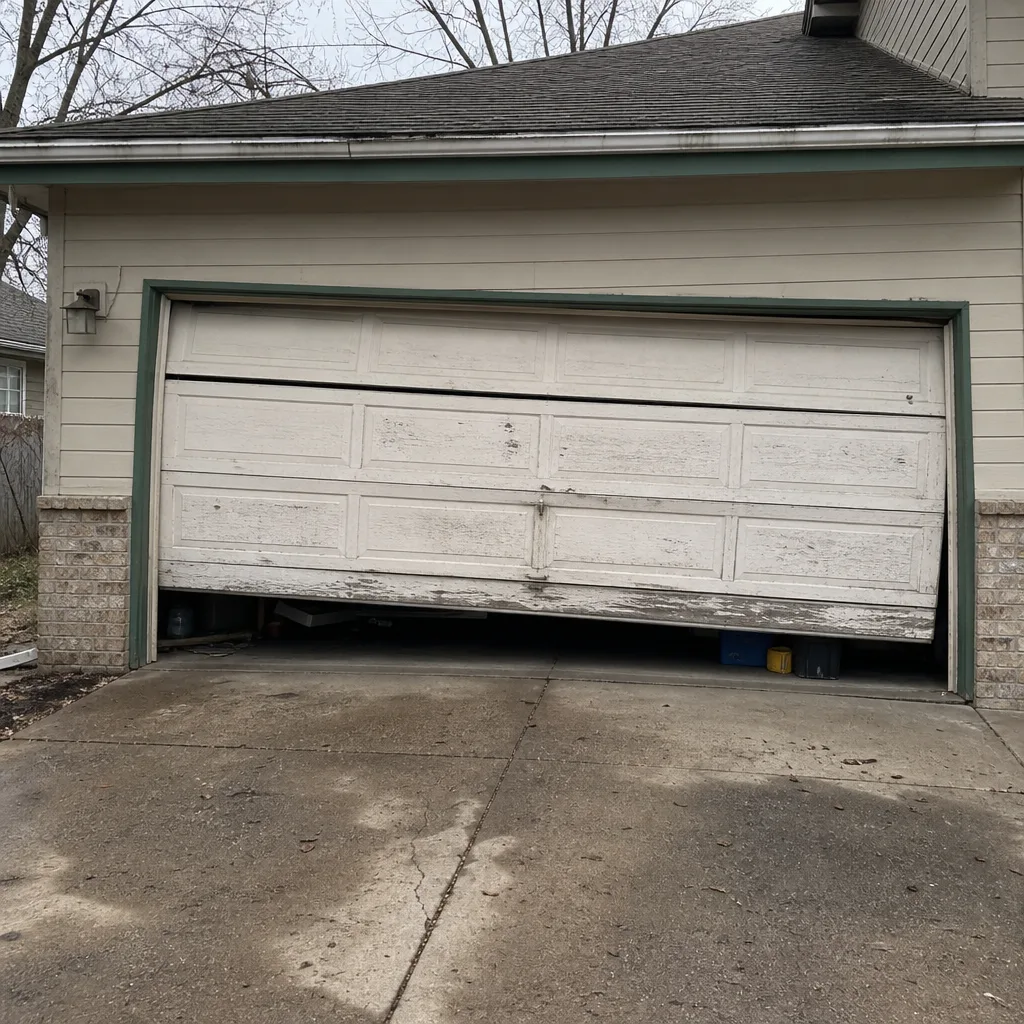 Before
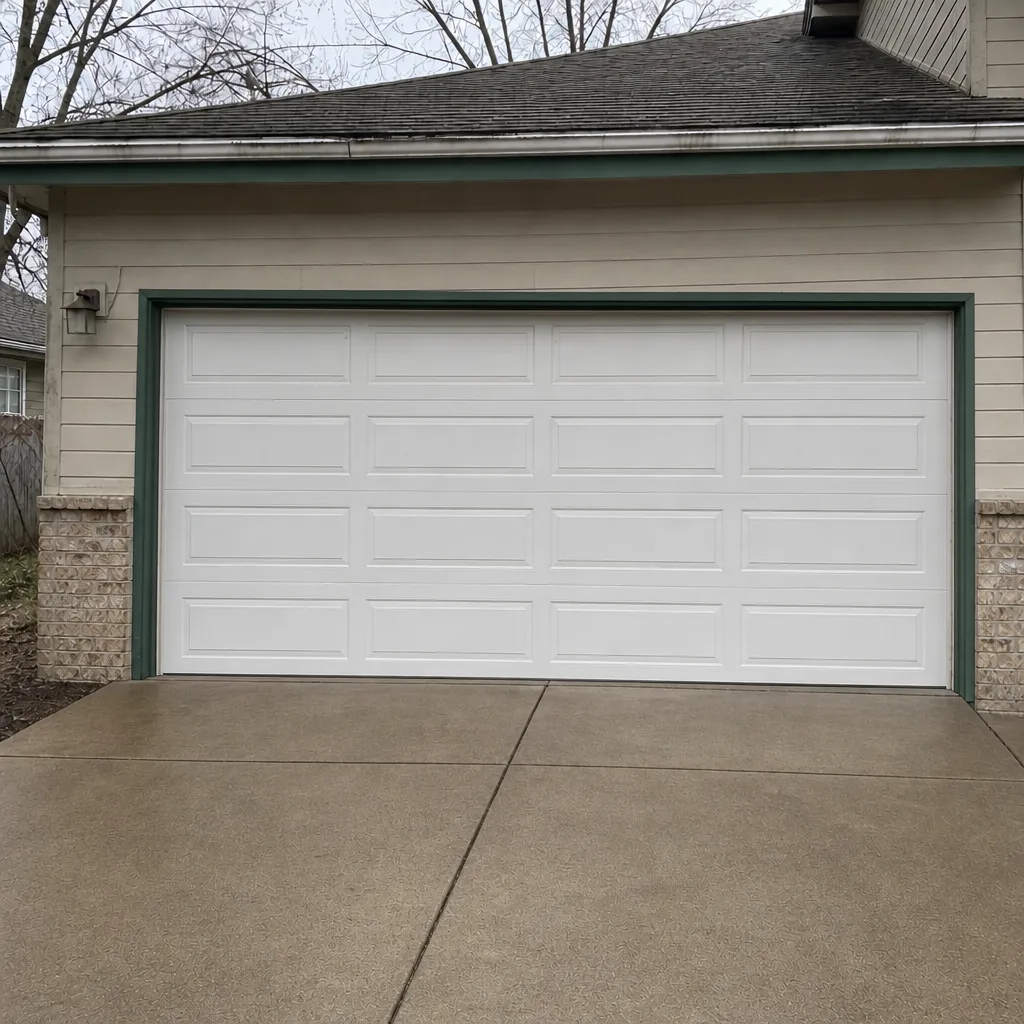 After
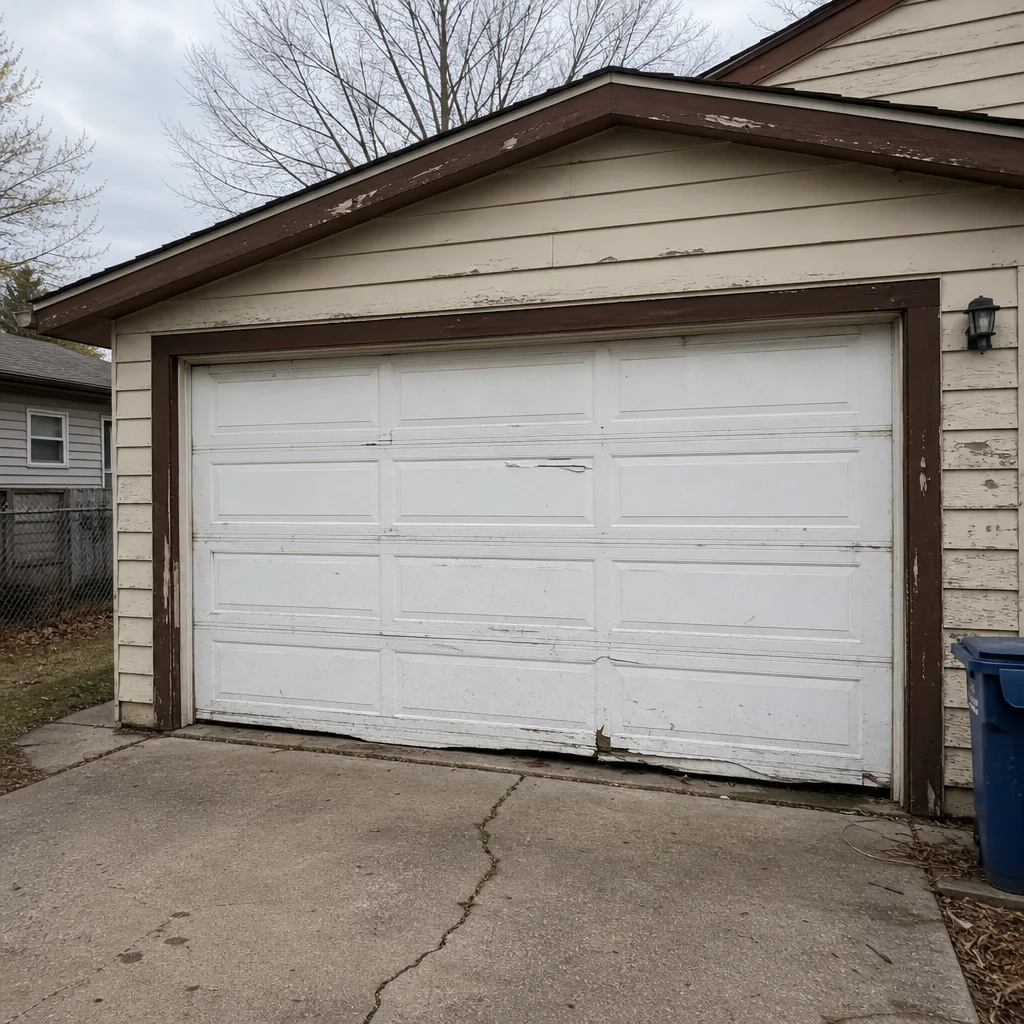 Before
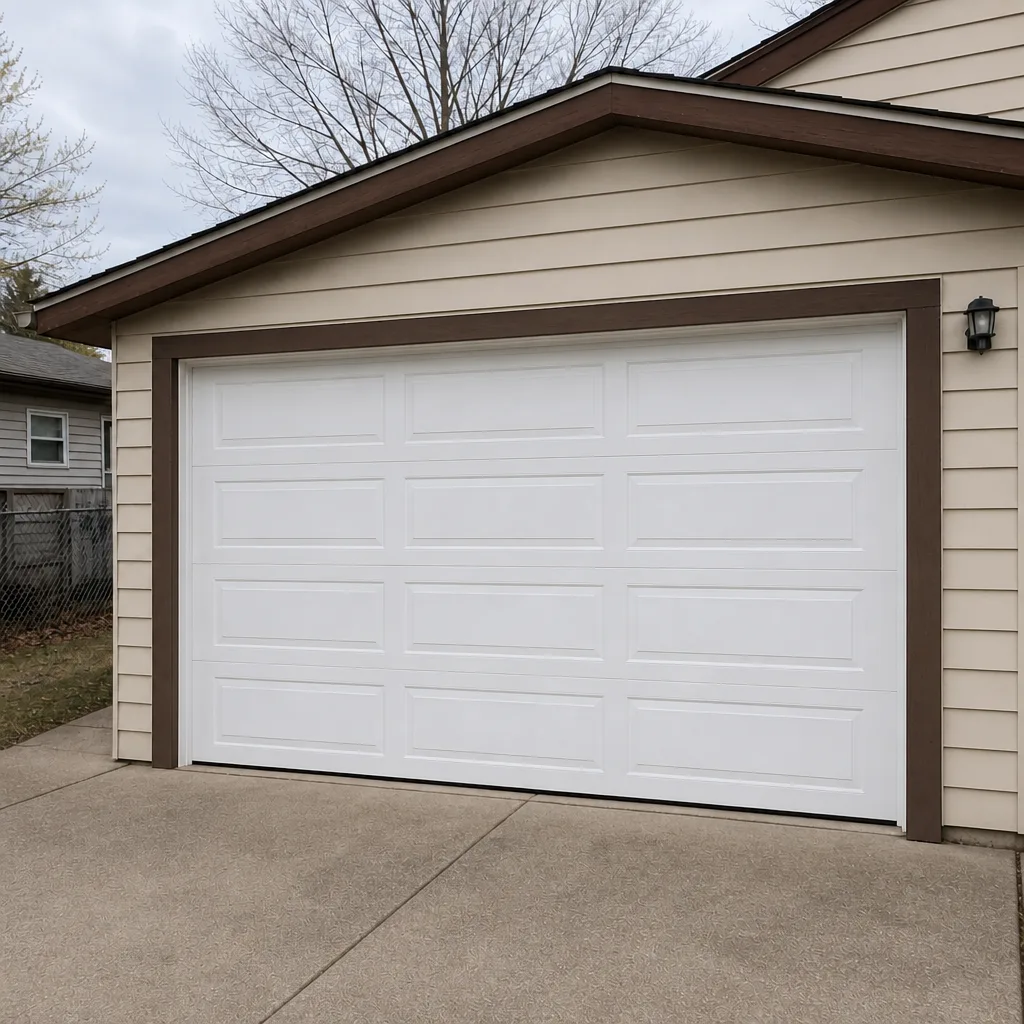 After
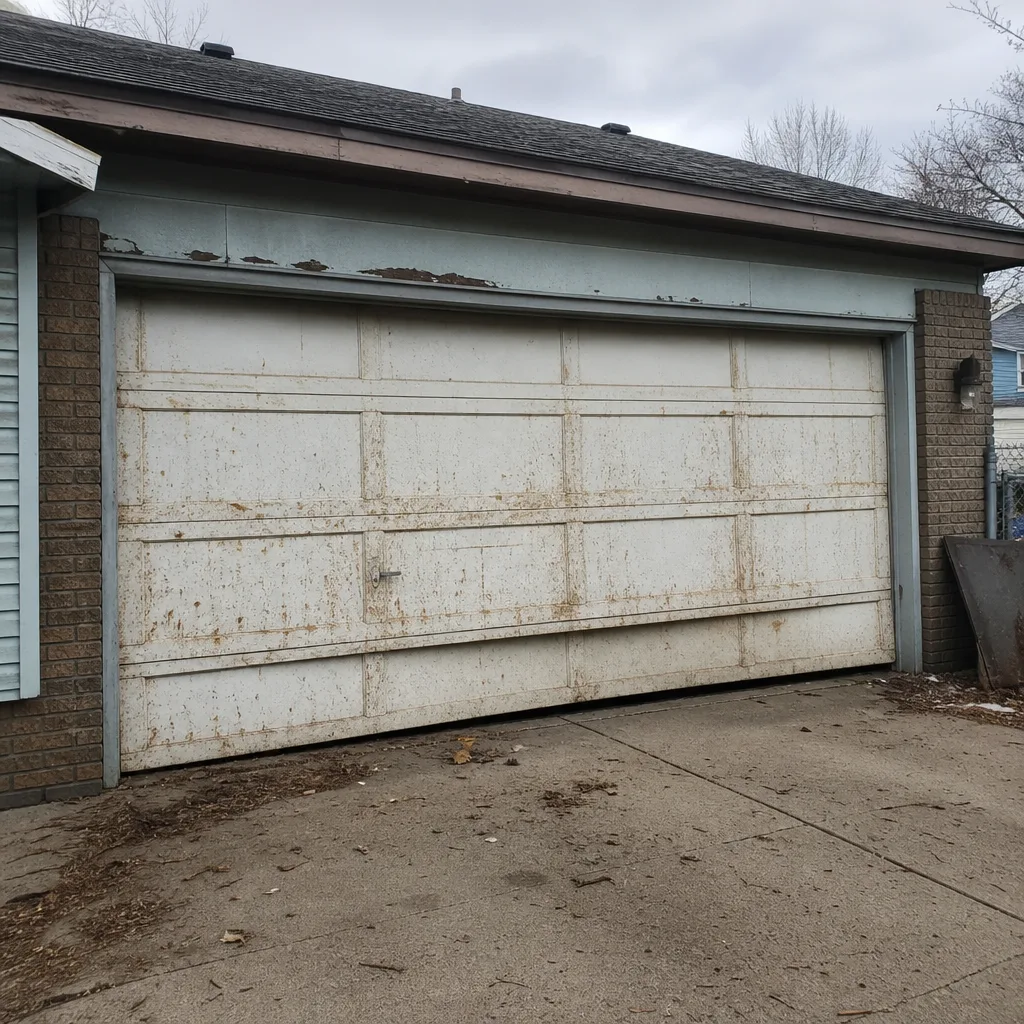 Before
 After
When to Call a Professional
Any spring, cable, or track issue should go to a trained technician, and any time the door won’t stay up, drops on its own, or is hanging crooked, stop using it and call. Those are the situations where trying to diagnose further puts you in the path of stored energy or a falling panel. Noise, rattle, and slow-moving symptoms are worth a call even if they don’t feel urgent, because the pattern matters more than the single symptom. Our technicians have up to 14 years of experience, and we handle the whole system: springs, openers, panels, and full doors, plus emergency service when a door is stuck, off its track, or won’t secure the house.
If you’re in Blaine or anywhere in the northern Twin Cities metro, we can come out and take a look. Blaine Garage Door Repair Co offers free estimates in Blaine – call (855) 547-9108 to get on the schedule.
Frequently Asked Questions
The first sign is usually a hesitation before the door moves, followed by the balance test failing: the door won’t hold its position when you lift it by hand. A visible gap in the spring coil or a sharp pop during travel are later, more serious signs. If you’re seeing any of these, don’t keep running the door. Call (855) 547-9108 for an estimate; we can usually tell you whether it’s a same-day spring replacement or a scheduled visit.
Spring repair in Blaine typically runs a few hundred dollars per spring, and a matched pair that’s replaced together costs about twice the single-spring price. The final number depends on spring size, door weight, and whether the opener needs adjustment at the same time. We quote a range up front, you agree to it, and the written estimate sets the price before any work starts. Call (855) 547-9108 for an exact quote – estimates are free.
No. Cables are under constant tension from the spring system, and releasing or replacing one without the proper tools and training is one of the most dangerous things a homeowner can attempt on a garage door. Frayed cables are a call-today item. Call (855) 547-9108 and we’ll get someone out.
Not necessarily. Cold stiffens grease and thickens hydraulic fluid in some openers, so a door that moves a bit slower on a cold morning for the first cycle or two is doing what it’s supposed to. If the hesitation persists through the whole cycle, happens on mild days too, or gets worse week over week, the spring is the likely culprit. Call (855) 547-9108 and describe what you’re seeing.
A pop during travel usually means a torsion spring is slipping against its winding bars, a cable has jumped its drum, or a panel is flexing because the door is binding. Pop sounds are serious and worth a same-day call, because they tend to come just before a spring failure. Call (855) 547-9108 to schedule a diagnostic.
No. After the tech inspects the door, you get a written estimate, and that number is the price. If the diagnosis turns up something that wasn’t visible at first, the tech walks you through it before any work starts, so nothing happens without your agreement. Call (855) 547-9108 for a free estimate.
The Bottom Line
Garage doors give notice, and the homeowners who catch the earliest signs in Blaine spend less and stay safer. A hesitation before the door moves means the spring is failing. A pop during travel is a same-day call. A grinding or squealing that shows up one week and stays is a scheduled visit, not an emergency. The balance test is your best early-warning tool and takes two minutes with the door closed. Cold-weather stiffness, weather-related squeaks, and first-cycle sluggishness are normal and don’t need a call. Everything that touches springs, cables, or tracks is professional territory, and the full-system coverage here means you don’t have to hunt for a second contractor if the opener, springs, and track all need attention. The right fix, not a quick patch, is what keeps a Blaine door running through another winter.
Ready to get a professional eye on the system? Call Blaine Garage Door Repair Co at (855) 547-9108 for a free estimate. We work on your brand, whatever it is.
Written by the team at Blaine Garage Door Repair Co.